How to Read OBD2 Error Codes Without a Dealership Visit
Updated May 1, 2025
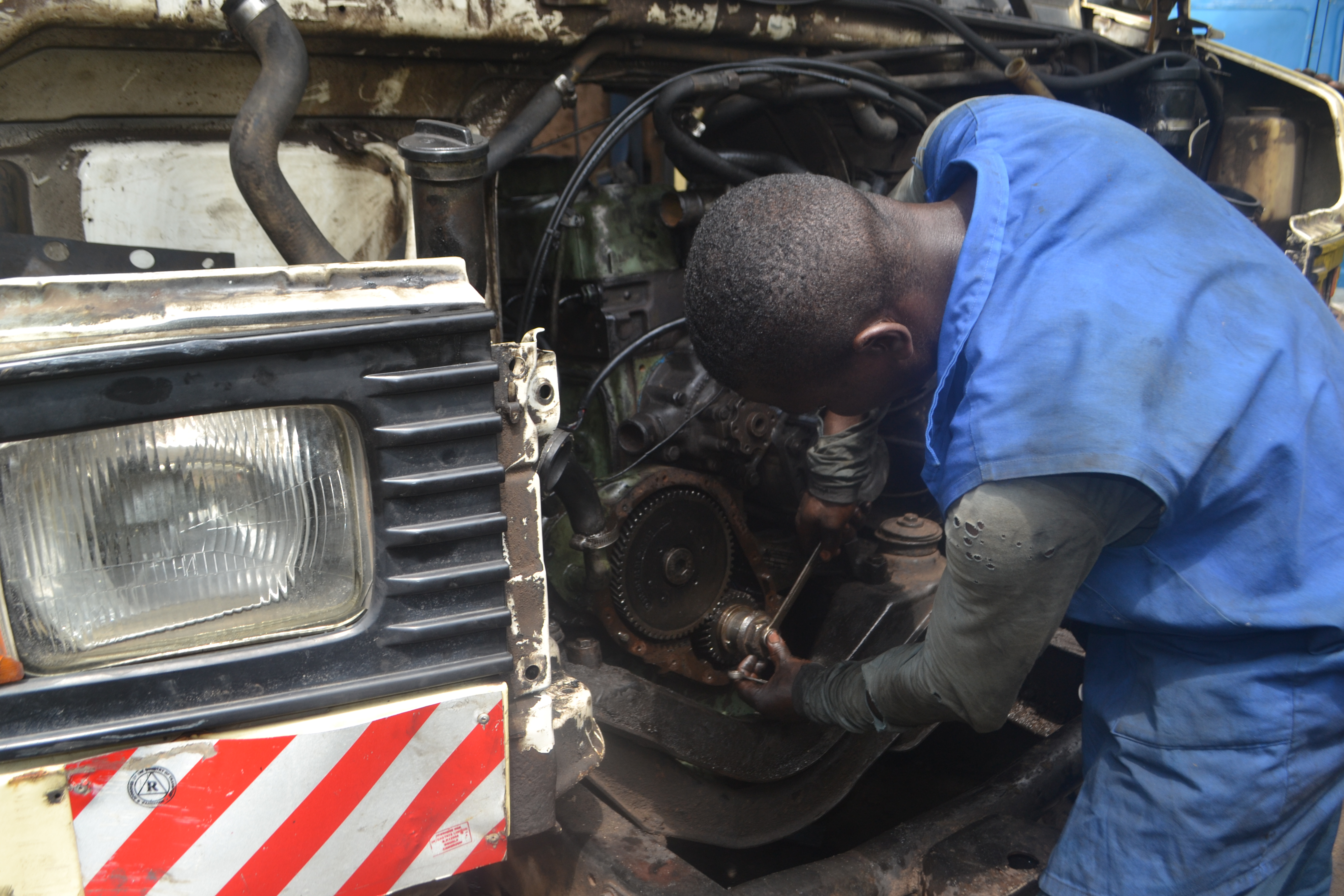
The check-engine light is one of the least informative warning signals in a modern car. It illuminates for reasons ranging from a loose fuel cap to a misfiring cylinder, but it gives the driver no clue about severity. The OBD2 system — mandated on all petrol vehicles sold in the EU after 2001 and all diesels after 2004 — stores detailed fault codes that a scanner can read in under two minutes. Here is how to interpret what comes out.
The Four Code Families
Every OBD2 code starts with a letter indicating which vehicle system generated the fault:
- P — Powertrain. Engine, transmission, and associated emissions controls. The most common category in Romanian independent workshops. Codes P0100–P0199 cover air/fuel metering; P0300–P0399 are misfire codes.
- B — Body. Airbags, seatbelt pretensioners, climate control, and comfort electronics. These rarely affect drivability but may disable safety systems silently.
- C — Chassis. ABS, traction control, power steering. C-codes frequently appear after pothole impacts on DN-class roads — a damaged wheel-speed sensor triggers them before any brake fade is noticeable.
- U — Network/Communication. Module-to-module communication faults. A U-code alone usually indicates a loose ground wire or a failed CAN bus node, not a component failure.
Within each family, the second character distinguishes generic (0) from manufacturer-specific (1, 2, 3) codes. Generic codes follow the SAE J1979 standard, meaning any scanner reads them the same way regardless of vehicle brand. Manufacturer-specific codes require brand-appropriate software — an ELM327-based Bluetooth dongle will display the raw hex but may not decode the description accurately.
Freeze-Frame Data: The Context a Code Lacks
When a fault trips, the ECU captures a snapshot of operating conditions at that instant: engine load, RPM, coolant temperature, fuel trim, vehicle speed, and intake air temperature. This freeze-frame is stored alongside the DTC and tells you whether the fault occurred at cold start, at highway cruise, or under hard acceleration.
A P0420 (catalyst efficiency below threshold) that appears only at cold start, with coolant below 40°C, is a different problem from one that appears at full operating temperature. The first points to a cold-start enrichment issue or an aging lambda sensor; the second suggests the catalytic converter itself is degraded. Without freeze-frame, both look identical in the DTC list.
Most sub-€100 scanners sold in Romania read freeze-frame. The distinction worth paying for is live data streaming — the ability to watch lambda voltage, throttle position, and fuel trim in real time while driving. This turns static codes into a dynamic picture of what the engine actually does.
Pending vs. Confirmed Codes
A pending code (also called a matured or stored code) is one the ECU has detected once but not confirmed across multiple drive cycles. Confirmed codes have appeared on two or more consecutive trips under the conditions that trigger the monitor. The check-engine light illuminates only for confirmed codes. Pending codes are visible in mode $07 of the OBD2 protocol — most mid-range scanners show them in a dedicated "pending DTCs" menu.
Pending codes are worth noting even without the warning light. A P0300 (random misfire) that appears as pending after city driving and disappears at the next scan may indicate marginal spark plugs that fail intermittently under low-speed, high-load conditions — a pattern invisible to single-point snapshots.
Readiness Monitors and the ITP Inspection
Romania's ITP vehicle inspection (Inspecția Tehnică Periodică) includes an OBD check for vehicles registered after 2006. The inspector queries the ECU for readiness monitor status — eight to eleven background self-tests the ECU runs continuously. If more than one monitor shows "incomplete," the vehicle fails the OBD portion of the ITP regardless of whether a DTC is present.
Monitors reset when the battery is disconnected or when fault codes are cleared. A freshly cleared code bank will show most monitors as incomplete. The vehicle needs one to three complete drive cycles — including cold start, highway operation, and idle — before the monitors complete. Attempting an ITP within 48 hours of clearing codes is a common and avoidable failure.

What a Generic ELM327 Scanner Gets Wrong
ELM327-based adapters are the most common diagnostic tool at Romanian independent workshops. The chip is legitimate and capable, but the quality of the surrounding hardware varies significantly. Clones using counterfeit ELM327 firmware (identifiable by the chip reporting version 1.5 or 2.1 on a board clearly newer than 2018) often drop CAN bus frames, misread VIN, or fail to query all ECU modules. The result is a code read that appears complete but misses faults stored in the ABS or airbag modules.
For chassis and body system diagnosis, a scanner that queries individual modules by address (rather than relying on the generic OBD2 broadcast) produces more complete results. VCDS for VW Group vehicles, Forscan for Ford/Mazda, and Techstream for Toyota are manufacturer-specific options with Romanian-language community support forums where local fault patterns are documented.
After the Code: What Comes Next
A DTC is the starting point of diagnosis, not the conclusion. P0171 (system lean, bank 1) can be caused by a vacuum leak, a dirty mass air flow sensor, a failing fuel pressure regulator, or a lazy lambda sensor. The code narrows the search; it does not identify the faulty part. A technician who replaces parts based solely on DTC descriptions without live data correlation is guessing in sequence, not diagnosing.
The most efficient diagnostic path starts with the freeze-frame data, adds a visual inspection of the vacuum system and fuel trim at idle and under load, and uses part substitution only after the data points to a specific component. This approach applies identically whether the workshop is authorized or independent — the difference lies in equipment quality and the technician's willingness to follow the data.
Sources: SAE J1979 OBD2 standard; RAR Romania ITP technical requirements 2024.

